http://www.gsi.go.jp/MAP/KOTIZU/sisak/ino-main.html
閲覧できる伊能大図は、国立歴史民俗博物館所蔵(34・35番)及び国立国会図書館(107番)の図を除いた211枚です。
伊能大図の画像は、検索画面から検索方法を選択して閲覧することができます。 画像は基本的に北の方角が上を向いています。
伊能大図の画像は、検索画面から検索方法を選択して閲覧することができます。 画像は基本的に北の方角が上を向いています。

(90番「相模・相模野・下總・武蔵・江戸」の一部分)
|
|
|
==========================================================
Philipp Franz von Siebold
Fauna Japonica 1934-1937
Reprint, originally published in Lugduni Batavorum [Leiden], 1833-1850
==========================================================
・Flora Japonica - University of Kyoto
・Siebold University of Nagasaki
・Siebold Huis - a museum in the house where Siebold lived in Leiden
・ The Siebold Museum in Würzburg
・Siebold's Nippon, 1897 (in German)
・Proceedings of the symposium 'Siebold in the 21st Century' held at the University Museum, the University of Tokyo, in 2003
=================
日本植物誌 Flora Japonica
http://edb.kulib.kyoto-u.ac.jp/exhibit/b01/b01cont.html
本書はシーボルト(Siebold, Philipp Franz Balthazar von, 1796-1866)が日本において収集した植物標本や、川原慶賀などの日本人絵師が描いた下絵をもとに作成され、1835年から1870年にかけて30分冊として刊行されました。

第1巻標題紙
使い方
・本書は全2巻から成り、左の[標題紙]をクリックすると表紙から順番に資料を見ることができます。
・第2巻はこちらから
・図版番号をクリックすると、該当する図版を表示します。
・本文ページをクリックすると、本文中の記載箇所を表示します。
・各図版及び本文からこの一覧に戻るには[Table of Contents]をクリックします。
図版一覧について
・和名・現在の学名:『シーボルト「フローラ・ヤポニカ」 日本植物誌』(2000年 八坂書房)に従いました。
・図版番号:原本の図版番号。
・本文ページ:本文の記載箇所のページ。
・記載の学名:図版に記載された学名。
参考文献
・[シーボルト著];木村陽二郎, 大場秀章解説『シーボルト「フローラ・ヤポニカ」 日本植物誌』(2000年 八坂書房)
・P.F.B.フォン・シーボルト著;大場秀章監修・解説;瀬倉正克訳『シーボルト 日本の植物』(1996年 八坂書房)
・北村四郎[ほか]解説『シーボルト「フロラヤポニカ」解説』(1976年 講談社)
・木村陽二郎著『シーボルトと日本の植物 : 東西文化交流の源泉』(1981年 恒和出版)
・CALANUS カラヌス特別号1,2『シーボルトと日本の植物学』(1997-1998年 熊本大学理学部附属合津臨海実験所)
Copyright 2001. Kyoto University Library
==========================================================
ORIGINS AND CHARACTERISTICS OF
THE JAPANESE COLLECTION IN
THE BRITISH LIBRARY
YU-YING BROWN
http://www.bl.uk/eblj/1998articles/pdf/article10.pdf
==========================================================
Philipp Franz von Siebold
http://en.wikipedia.org/wiki/Philipp_Franz_von_Siebold
Philipp Franz Balthasar von Siebold (February 17, 1796 – October 18, 1866) was a German physician, botanist, and traveler. He taught some pupils Western medicine in Japan. He achieved prominence for his study of Japanese flora and fauna, and was the father of female Japanese doctor, Kusumoto Ine.
Born into a family of doctors and professors of medicine in Würzburg (then in the Bishopric of Würzburg), von Siebold initially studied medicine at University of Würzburg from November 1815,[1] where he became a member of the Corps Moenania Würzburg. One of his professors was Franz Xaver Heller (1775–1840), author of the Flora Wirceburgensis ("Flora of the Grand Duchy of Würzburg", 1810–1811).[1] Ignaz Döllinger (1770–1841), his professor of anatomy and physiology, however, most influenced him. Döllinger was one of the first professors to understand and treat medicine as a natural science. Von Siebold stayed with Döllinger, where he came in regular contact with other scientists.[1] He read the books of Alexander von Humboldt, a famous naturalist and explorer, which likely raised his desire to travel to distant lands.[1] Philipp von Siebold became a medical doctor by earning his M.D. in 1820. He initially practiced medicine in Heidingsfeld, Germany (now part of Würzburg).[1]
Invited to Holland by an acquaintance of the family, von Siebold applied for a position as a military physician. This position would enable him to travel to the Dutch colonies.[1] He entered Dutch military service on June 19, 1822. He was appointed ship's physician on the frigate Adriana on the voyage from Rotterdam to Batavia (present-day Jakarta) in the Dutch East Indies (present-day Indonesia).[1] On his trip to Batavia on the frigate Adriana, he practiced his knowledge of the Dutch language and rapidly learned Malay, and during the long trip, Von Siebold started a collection of marine fauna.[1] He arrived in Batavia on February 18, 1823.[1]
As an army medical officer, von Siebold posted with an artillery unit. He stayed, however, a couple of weeks at the residence of the governor-general to recover from illness. With his erudition, he impressed the governor-general baron Godert van der Capellen and the head of the botanical garden Buitenzorg (Bogor), Caspar Georg Carl Reinwardt.[1] Already, these men sensed a successor to Engelbert Kaempfer and Carl Peter Thunberg (author of Flora Japonica), both former resident physicians at Dejima.[1] The Batavian Academy of Arts and Science made Von Siebold a member.
Arrival in Japan
Von Siebold was sent to Dejima, the artificial island next to Nagasaki, on June 28, 1823, and arrived on August 11, 1823 as the new resident physician and scientist.[1] During his eventful trip he barely escaped drowning during a typhoon in the East China Sea.[1] Since only a very limited number of Dutch citizens were allowed on this island, the posts of physician and scientist had to be combined. At that time, Dejima was no longer in the possession of the Dutch East Indian Company VOC (which had gone bankrupt in 1798), but was kept running by the Dutch State for political considerations.
The European tradition of sending doctors with botanical training to Japan was a long one. Sent on a mission by the Dutch East India Company, Engelbert Kaempfer (1651–1716), a German physician and botanist who lived in Japan from 1690 until 1692, ushered in this tradition of a combination of physician and botanist. The Dutch East India Company did not, however, actually employ the Swedish botanist and physician Carl Peter Thunberg (1743–1828), who arrived in Japan in 1775.
Japanese scientists invited von Siebold to show them the marvels of western science, and he learned in return through them much about the Japanese and their customs. After curing an influential local officer, von Siebold gained the permission to leave the trade post. He used this opportunity to treat Japanese patients in the greater area around the trade post. Siebold is credited with the introduction of vaccination and pathological anatomy for the first time in Japan.[2]
Von Siebold began a medical school, the Narutaki-juku, that grew into a meeting place for around fifty students. They helped him in his botanical and naturalistic studies. The Dutch language became the lingua franca (common spoken language) for these academic and scholarly contacts for a generation, until the Meiji Restoration.
Medical practise

His patients paid him in kind with a variety of objects and artifacts that would later gain historical significance. These everyday objects later became the basis of his large ethnographic collection, which consisted of everyday household goods, woodblock prints, tools and hand-crafted objects used by the Japanese people.
Japanese family
During his stay in Japan von Siebold "lived together" with Kusumoto Taki (楠本滝),[1] gave birth to their daughter O-Ine in In 1827.[1] Von Siebold used to call his wife "Otakusa" (probably derived from O-Taki-san) and named a Hydrangea after her. O-Ine eventually became the first Japanese woman known to have received a physician's training, and became a highly regarded practicing physician. She died in 1903.[1]
Studies of Japanese fauna and flora
His main interest, however, focused on the study of Japanese fauna and flora. He collected as much material as he could. Starting a small botanical garden behind his home (there was not much room on the small island) von Siebold amassed over 1,000 native plants.[1] In a specially built glasshouse he cultivated the Japanese plants to endure the Dutch climate. Local Japanese artists drew images of these plants, creating botanical illustrations and images of the daily life in Japan, which complemented his ethnographic collection. He hired Japanese hunters to track rare animals and collect specimens. Many specimens were collected with the help of his Japanese collaborators Keisuke Ito (1803–1901), Mizutani Sugeroku (1779–1833), Ōkochi Zonshin (1796–1882) and Katsuragawa Hoken (1797–1844), a physician to the Shogun. As well, von Siebold's assistant and later successor, Heinrich Bürger (1806–1858), proved to be indispensable in carrying on Von Siebold's work in Japan.
Von Siebold first introduced to Europe such familiar garden-plants as the Hosta and the Hydrangea otaksa. Unknown to the Japanese, he was also able to smuggle out germinative seeds of tea plants to the botanical garden Buitenzorg in Batavia. Through this single act, he started the tea culture in Java, a Dutch colony at the time. Until then Japan had strictly guarded the trade in tea plants. Remarkably, in 1833, Java already could boast a half million tea plants.
During his stay at Dejima, he sent three shipments with an unknown number of herbarium specimens to Leiden, Ghent, Brussels and Antwerp. The shipment to Leiden contained the first specimens of the Japanese giant salamander (Andrias japonicus) to be sent to Europe.
In 1825 the Indian government provided him with two assistants: apothecary and mineralogist Heinrich Bürger (his later successor) and the painter Carl Hubert de Villeneuve. Each would prove to be useful to Siebold's efforts that ranged from ethnographical to botanical to horticultural, when attempting to document the exotic Eastern Japanese experience.
Reportedly, von Siebold was not the easiest man to deal with; he was in continuous conflict with his Dutch superiors, who felt he was arrogant. This threat of conflict resulted in his recall in July 1827 back to Batavia. But the ship, the Cornelis Houtman, sent to carry him back to Batavia, was thrown ashore by a typhoon in Nagasaki bay. The same storm badly damaged Dejima and destroyed von Siebold's botanical garden. Repaired, the Cornelis Houtman set afloat. It left for Batavia with 89 crates of Siebold's salvaged botanical collection, but Von Siebold remained behind in Dejima.
Siebold Incident In 1826 von Siebold made the court journey to Edo. During this long trip he collected many plants and animals. But he also obtained from the court astronomer Takahashi Kageyasu several detailed maps of Japan and Korea (written by Inō Tadataka), an act strictly forbidden by the Japanese government.[1] When the Japanese discovered, by accident, that von Siebold had a map of the northern parts of Japan, the government accused him of high treason and of being a spy for Russia.[1]
The Japanese ordered von Siebold into house arrest and expelled him from Japan on October 22, 1829.[1] Satisfied that his Japanese collaborators would continue his work, he journeyed back on the frigate Java to his former residence, Batavia, in possession of his enormous collection of thousands of animals and plants, his books and his maps.[1] The botanical garden of Buitenzorg would soon house von Siebold's surviving, living flora collection of 2,000 plants. He arrived in the Netherlands on July 7, 1830. His stay in Japan and Batavia had lasted for a period of eight years.[1]
Siebold Incident
In 1826 von Siebold made the court journey to Edo. During this long trip he collected many plants and animals. But he also obtained from the court astronomer Takahashi Kageyasu several detailed maps of Japan and Korea (written by Inō Tadataka), an act strictly forbidden by the Japanese government.[1] When the Japanese discovered, by accident, that von Siebold had a map of the northern parts of Japan, the government accused him of high treason and of being a spy for Russia.[1]
The Japanese ordered von Siebold into house arrest and expelled him from Japan on October 22, 1829.[1] Satisfied that his Japanese collaborators would continue his work, he journeyed back on the frigate Java to his former residence, Batavia, in possession of his enormous collection of thousands of animals and plants, his books and his maps.[1] The botanical garden of Buitenzorg would soon house von Siebold's surviving, living flora collection of 2,000 plants. He arrived in the Netherlands on July 7, 1830. His stay in Japan and Batavia had lasted for a period of eight years.[1]
Return to Europe
Philipp Franz von Siebold arrived just at a time when, in 1830, political troubles erupted in Brussels, leading soon to the Belgian independence. Hastily he salvaged his ethnographic collections in Antwerp and his herbarium specimens in Brussels and took them to Leiden.[1] He left behind his botanical collections of living plants that were sent to the University of Ghent.[1] The consequent expansion of this collection of rare and exotic plants led to the horticultural fame of Ghent. In gratitude the University of Ghent presented him in 1841 with specimens of every plant from his original collection.
Von Siebold settled in Leiden, taking with him the major part of his collection.[1] The "Philipp Franz von Siebold collection", containing many type specimens, was the earliest botanical collection from Japan. Even today, it still remains a subject of ongoing research, a testimony to the depth of work undertaken by von Siebold. It contained about 12,000 specimens, from which he could describe only about 2,300 species. The whole collection was purchased for a handsome amount by the Dutch government. Von Siebold was also granted a substantial annual allowance by the Dutch King William II and was appointed Advisor to the King of Japanese Affairs. In 1842 the King even raised von Siebold to the peerage as an esquire.
During his stay in Leiden, von Siebold wrote Nippon in 1832, the first part of a volume of a richly illustrated ethnographical and geographical work on Japan. The 'Archiv zur Beschreibung Nippons' also contained a report of his journey to the Shogunate Court at Edo.[1] He wrote six further parts, the last ones published posthumously in 1882; his sons published an edited and cheap reprint in 1887.[1]
The Bibliotheca Japonica appeared between 1833 and 1841. This work was co-authored by Joseph Hoffmann and Kuo Cheng-Chang, a Javanese of Chinese extraction, who had journeyed along with Von Siebold from Batavia.[1] It contained a survey of Japanese literature and a Chinese, Japanese and Korean dictionary.[1]
The zoologists Coenraad Temminck (1777–1858), Hermann Schlegel (1804–1884), and Wilhem de Haan (1801–1855) scientifically described and documented von Siebold's collection of Japanese animals.[1] The Fauna Japonica, a series of monographs published between 1833 and 1850, was mainly based on von Siebold's collection, making the Japanese fauna the best-described non-European fauna – "a remarkable feat for von Siebold". A significant part of the Fauna Japonica was also based on the collections of von Siebold's successor on Dejima, Heinrich Bürger.
Von Siebold wrote his Flora Japonica in collaboration with the German botanist Joseph Gerhard Zuccarini (1797–1848). It first appeared in 1835, but the work was not completed until after his death, finished in 1870 by F. A. W. Miquel (1811–1871), director of the Rijksherbarium in Leiden. This work expanded von Siebold's scientific fame from Japan to Europe.
From the Hortus Botanicus Leiden – the botanical garden of Leiden – many of von Siebold's plants spread to Europe and from there to other countries. Hosta and Hortensia, Azalea, and the Japanese butterbur and the coltsfoot as well as the Japanese larch began to inhabit gardens across the world.
International reputation
After his return to Europe Von Siebold tried to exploit his knowledge of Japan. Whilst living in Boppard, from 1852 he corresponded with Russian diplomats such as Baron von Budberg-Bönninghausen, the Russian ambassador to Prussia, which resulted in an invitation to go to St Petersburg to advise the Russian government how to open trade relations with Japan. Though still employed by the Dutch government he did not inform the Dutch of this voyage until after his return. American Naval Commodore Matthew C. Perry consulted von Siebold in advance of his voyage to Japan in 1854.[6] In 1858 the Japanese government lifted the banishment of von Siebold. He returned to Japan in 1859 as an adviser to the Agent of the Dutch Trading Society (Nederlandsche Handel-Maatschappij) in Nagasaki, Albert Bauduin. After two years the connection with the Trading Society was severed as the advice of von Siebold was of no value. In Nagasaki he fathered another child with one of his female servants. In 1861 von Siebold organised his appointment as an adviser to the Japanese government and went in that function to Edo. There he tried to obtain a position between the foreign representatives and the Japanese government. As he had been specially admonished by the Dutch authorities before going to Japan that he was to abstain from all interference in politics, the Dutch Consul General in Japan, J. K. de Wit, was ordered to ask von Siebold's removal.[7] Von Siebold was ordered to return to Batavia and from there he returned to Europe. After his return he asked the Dutch government to employ him as Consul General in Japan but the Dutch government severed all relations with von Siebold who had a huge debt because of loans given to him, except for the payment of his pension.
Von Siebold kept trying to organise an other voyage to Japan. After he did not succeed in gaining employment with the Russian government, he went to Paris in 1865 to try to interest the French government in funding another expedition to Japan, but failed. He died in Munich on October 18, 1866.[1]
This page was last modified on 29 December 2013
==========================================================
シーボルト事件
シーボルト事件(シーボルトじけん)は、江戸時代後期の1828年に起きた事件。
樺太東岸の資料を求めていた景保にシーボルトがクルーゼンシュテルンの『世界周航記』などを贈り、その代わりに、景保が伊能忠敬の『大日本沿海輿地全図』の縮図をシーボルトに贈った。この縮図をシーボルトが国外に持ち出そうとした。
シーボルトは、江戸で幕府天文方高橋景保のもとに保管されていた伊能図を見せられた。地図は禁制品扱いであったが、高橋は学者らしい単純さでシーボルトのために写しを同意した。後のシーボルト事件はこの禁制の地図の写しを持ち出したことにあった。
シーボルトらが1826年7月に江戸参府から出島に帰還し、この旅行で1000点以上の日本名や漢字名植物標本を種集できたが、日本の北方の植物にも興味をもち、間宮林蔵が蝦夷地で採取した押し葉標本を手に入れたく、間宮宛に丁重な手紙と布地を送ったが、間宮は外国人との私的な贈答は国禁に触れると考え、開封せずに上司に提出した。
高橋景保と間宮林蔵のあいだには確執があったといわれる[1]。間宮がシーボルトから受け取った手紙の内容が発端となり、多くの日本人と高橋景保は捕らえられ取調べを受けることになり、シーボルト自身も処分の決定を待つことになってしまった[2]。
長崎市鳴滝にあるシーボルト記念館の研究報告書である『鳴滝紀要』第六号(1996年)発表の梶輝行の論文「蘭船コルネリウス・ハウトマン号とシーボルト事件」で、これまで通説だった暴風雨で座礁した船中から地図等のご禁制の品々が発見されたという説が後日の創作であることが判明した。コルネリウス・ハウトマン号は1828年10月に出航を予定していたが、同年9月17日夜半から18日未明に西日本を襲った猛烈な台風(いわゆるシーボルト台風)で座礁し、同年12月まで離礁できなかったのである。従来の説は壊滅的な被害を受けて座礁した船の中から、禁制品の地図類や三つ葉葵の紋付帷子などが見つかっていたことになっていたが、座礁した船の臨検もなくそのままにされ、船に積み込まれていたのは船体の安定を保つためのバラスト用の銅500ピコルだけだった。
江戸で高橋景保が逮捕され、これを受けてシーボルトへ高橋より送った「日本地図其の他、シーボルト所持致し居り候」ため、シーボルトの所持する日本地図を押収する内命が長崎奉行所にもたらされ、出島のシーボルトは訊問と家宅捜索をうけた。軟禁状態のシーボルトは研究と植物の乾燥や動物の剥製つくりをしてすごしたが、今までの収集品が無事オランダやバタヴィアに搬出できるかどうか心配であり、コレクションの中には個人的に蒐集していた標本や絵画も所有しており、これが彼一人の自由には出来なくなっていた。
シーボルトは訊問で科学的な目的のためだけに情報を求めたと主張し、捕まった多くの日本人の友人を助けようと彼らに罪を負わせることを拒絶した。自ら日本の民になり、残りの人生を日本に留まることで人質となることさえ申し出た[3]。高橋は1829年3月獄死し、自分の身も危ぶまれたが、シーボルトの陳述は多くの友人と彼を手伝った人々を救ったといわれている。しかし、日本の地図を持ち出すことは禁制だと彼自身知っていたはずであり、日本近海の海底の深度測定など、スパイの疑惑が晴れたわけではない[4]。
シーボルトは高野長英から、医師以外の肩書は何か、と問われて、「コンテンス・ポンテー・ヲルテ」とラテン語で答えたと渡辺崋山が書いているが、これは「コレスポンデントヴェルデ」であり、内情探索官と訳すべきものである[5]。
なお、シーボルトは安政5年(1858年)の日蘭修好通商条約の締結により追放が解除となり、翌安政6年(1859年)に長男アレクサンダーを伴って再来日し、幕府の外交顧問となっている。
最終更新 2013年11月30日
==========================================================
シーボルト事件と流出地図
http://www.hh.em-net.ne.jp/~harry/komo_siebold_top.html
今から25年程前米国ボストンの骨董市で古い日本地図 を二枚入手した。 壱枚は新聞の様なものに白黒で印刷されており 「日本辺界略図」という日本を中心とする東アジアの地図で新聞の日付は1853年11月19日となっている。
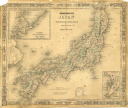
壱枚はやはり新聞か大形本の様なものに現在の地図の形と殆どかわらない日本及び別枠に蝦夷(北海道)と長崎が 色刷りで印刷されており、裏には1862年の日付で南北戦争の記事が載っている。 尚後者にはシーボルトの地図を元に編集した旨が記入されている。
これらの地図はそのまま押し入れに保存していたが、最近長崎を訪問してシーボルト記念館や出島を見学して来たので、この骨董地図にも光を当てて見た。

http://www.hh.em-net.ne.jp/~harry/komo_siebolt_loc.jpg
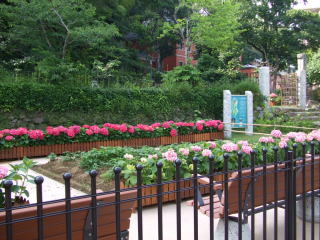
左の写真は長崎市内鳴滝のシーボルト屋敷跡、右奥レンガ風の建物は同記念館
シーボルトとは
シーボルト(1796-1866)はドイツ南部のバイエルン地方出身のドイツ人医師であるが日本へ強い興味を持つ。
当時ヨーロッパで唯一日本と交流があったオランダの軍医に採用され、文政6年(1823)出島のオランダ商館付きオランダ人医師として長崎に赴任する。 医学や植物学に明るく時の長崎奉行、高橋越前守の特別の計らいで翌年には出島外の鳴滝に民家を購入し塾を開く事が許される。
そこで多くの門弟が西洋医学や自然科学を学び、シーボルトは日本の医学や自然科学の発達に多大な貢献をした事で高く評価されている。
一方日本滞在中シーボルト事件を引き起こし、本人は文政12年(1829年)国外追放となり、多数の日本人関係者が処罰された事でも有名である。
尚日本の開国に伴い、30年後の安政六年(1859年)シーボルトはオランダの貿易顧問として再度日本に入国、幕府にも招かれ外交や自然科学の講義をおこなったが1862年帰国する。
シーボルト事件とは
シーボルトは長崎滞在中、文政9年(1827年)にオランダ商館長に付添い江戸を訪問している。 半年若の江戸滞在期間に精力的に幕府役人や民間人と接触し、特に幕府天文方高橋景保と交流を深め、日本地図や蝦夷地の地図を入手する。
当時地図の管理は非常に厳しく特に外国人に渡す事は国禁事項であったが、高橋もシーボルトの持つ貴重な情報が欲しく、情報入手の交換条件として地図を渡し国禁を犯す事となった。
やがて事が発覚してシーボルトは文政12年(1829年)国外追放となり、一方の高橋景保は獄死、且多くの関係者が処罰される事になる。
内閣文庫の文政雑記にはシーボルトの所持品や荷物の抜打ちの取調べ状況及び関係者の判決文が多数収録されている
これをシーボルト事件と言う。
○シーボルト部屋手入れと禁制品押収を見る(文政雑記)
○高橋景保始め関係者の判決文を見る(文政雑記)
==========================================================
シーボルト事件と流出地図
http://www.hh.em-net.ne.jp/~harry/komo_siebold_top.html
今から25年程前米国ボストンの骨董市で古い日本地図 を二枚入手した。 壱枚は新聞の様なものに白黒で印刷されており 「日本辺界略図」という日本を中心とする東アジアの地図で新聞の日付は1853年11月19日となっている。
壱枚はやはり新聞か大形本の様なものに現在の地図の形と殆どかわらない日本及び別枠に蝦夷(北海道)と長崎が 色刷りで印刷されており、裏には1862年の日付で南北戦争の記事が載っている。 尚後者にはシーボルトの地図を元に編集した旨が記入されている。
これらの地図はそのまま押し入れに保存していたが、最近長崎を訪問してシーボルト記念館や出島を見学して来たので、この骨董地図にも光を当てて見た。
http://www.hh.em-net.ne.jp/~harry/komo_siebolt_loc.jpg
左の写真は長崎市内鳴滝のシーボルト屋敷跡、右奥レンガ風の建物は同記念館
シーボルトとは
シーボルト(1796-1866)はドイツ南部のバイエルン地方出身のドイツ人医師であるが日本へ強い興味を持つ。
当時ヨーロッパで唯一日本と交流があったオランダの軍医に採用され、文政6年(1823)出島のオランダ商館付きオランダ人医師として長崎に赴任する。 医学や植物学に明るく時の長崎奉行、高橋越前守の特別の計らいで翌年には出島外の鳴滝に民家を購入し塾を開く事が許される。
そこで多くの門弟が西洋医学や自然科学を学び、シーボルトは日本の医学や自然科学の発達に多大な貢献をした事で高く評価されている。
一方日本滞在中シーボルト事件を引き起こし、本人は文政12年(1829年)国外追放となり、多数の日本人関係者が処罰された事でも有名である。
尚日本の開国に伴い、30年後の安政六年(1859年)シーボルトはオランダの貿易顧問として再度日本に入国、幕府にも招かれ外交や自然科学の講義をおこなったが1862年帰国する。
シーボルト事件とは
シーボルトは長崎滞在中、文政9年(1827年)にオランダ商館長に付添い江戸を訪問している。 半年若の江戸滞在期間に精力的に幕府役人や民間人と接触し、特に幕府天文方高橋景保と交流を深め、日本地図や蝦夷地の地図を入手する。
当時地図の管理は非常に厳しく特に外国人に渡す事は国禁事項であったが、高橋もシーボルトの持つ貴重な情報が欲しく、情報入手の交換条件として地図を渡し国禁を犯す事となった。
やがて事が発覚してシーボルトは文政12年(1829年)国外追放となり、一方の高橋景保は獄死、且多くの関係者が処罰される事になる。
内閣文庫の文政雑記にはシーボルトの所持品や荷物の抜打ちの取調べ状況及び関係者の判決文が多数収録されている
これをシーボルト事件と言う。
○シーボルト部屋手入れと禁制品押収を見る(文政雑記)
○高橋景保始め関係者の判決文を見る(文政雑記)
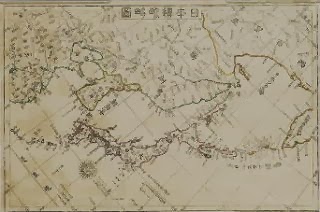

高橋景保監修、永田善吉の銅板による日本辺界略図、世界地図が並べて印刷されており、冒頭に景保の序文(文化6年、1809年)がある (国立公文書館蔵)
事件その後
シーボルトが何故地図を執拗に欲しがったか、何故事件が発覚したか、と云うのは小説の格好の材料と見えシーボルトはスパイだったとか、偶々シーボルトの積荷の船が難破して荷物に禁制品の地図があり発覚したとか間宮林蔵が密告したとか、等あるが後世の創作が多く真相は明確ではないようである。 しかし文政雑記の記事を見ると地図の受け渡しには、かなり多くの人が関わっているので、やはり誰かが密告したとしか思えない 尚シーボルトに渡った地図は、幕府の手入れで流出を事前に防ぎ回収された事になっている。
しかしシーボルトが退去後、1832年にオランダで刊行した「日本」では間宮海峡と命名されたカラフトを含む日本辺界略図がオランダ語で掲載されており、日本が高度の文化を持つ国として世界に紹介されているし、精度の高い伊能図も持ち出されていると言われている。
高橋景保始め処罰された人達には気の毒だが、その後の開国への道筋も含めて、シーボルト事件は日本の為には良かったのではないだろうか。

精度の高い日本地図
伊能忠敬の測量により、文政四年(1821)に幕府天文方で完成させた大日本沿海輿地全図が元になっていると考えられている。
地図中に下記が凡例と共に表示されている
Compiled from the maps of Siebold with additions from the surveys and reconnaissances of the U.S. Japan Ex.

http://www.hh.em-net.ne.jp/~harry/page_thumb52.html
http://www.hh.em-net.ne.jp/~harry/komo_siebolt_jmap63_thumb.JPG
ボストンの骨董市で入手
1863年頃の印刷
参考文献
内閣文庫文政雑記 国立公文書館
シーボルト「日本」 中井晶夫訳 雄松堂
シーボルトと日本の開国 続群書類従完成会
==========================================================
Netherlands Missions, Japan
http://japan.nlembassy.org/you-and-netherlands/dutch-japanese-relations.html
==========================================================


 https://twitter.com/Number10govUK Prime Minster